Research
Our main lines of research and current projects.
Belief formation & updating under visual noise

This line of research investigates how people form, maintain, and revise beliefs when perceptual evidence is uncertain, noisy, or progressively clarified over time. Using coherence-controlled visual stimuli, ambiguity manipulations, and multi-alternative forced-choice paradigms, we study the dynamics of commitment, uncertainty, and change of mind during belief formation.
A central goal is to understand how sensory evidence interacts with prior expectations, confidence, and decisional commitment, and how these processes unfold at both behavioural and neurophysiological levels. This work also includes computational approaches aimed at modelling belief dynamics, evidence accumulation, and updating under uncertainty.
Fake news, confidence & learning

This line of research explores how prior beliefs, confidence, and reinforcement interact when people evaluate and learn from true and false news. Using multi-phase paradigms, participants first judge the plausibility or veracity of news items, then undergo learning phases in which feedback and reward contingencies can reinforce or challenge their initial beliefs.
We investigate how belief-consistent information shapes learning, how confidence influences updating, and why some forms of misinformation remain resistant to correction. This work combines behavioural analyses, psychophysiology, and computational modelling to better understand how people learn in information environments saturated with uncertainty and bias.
Attention networks & temperament
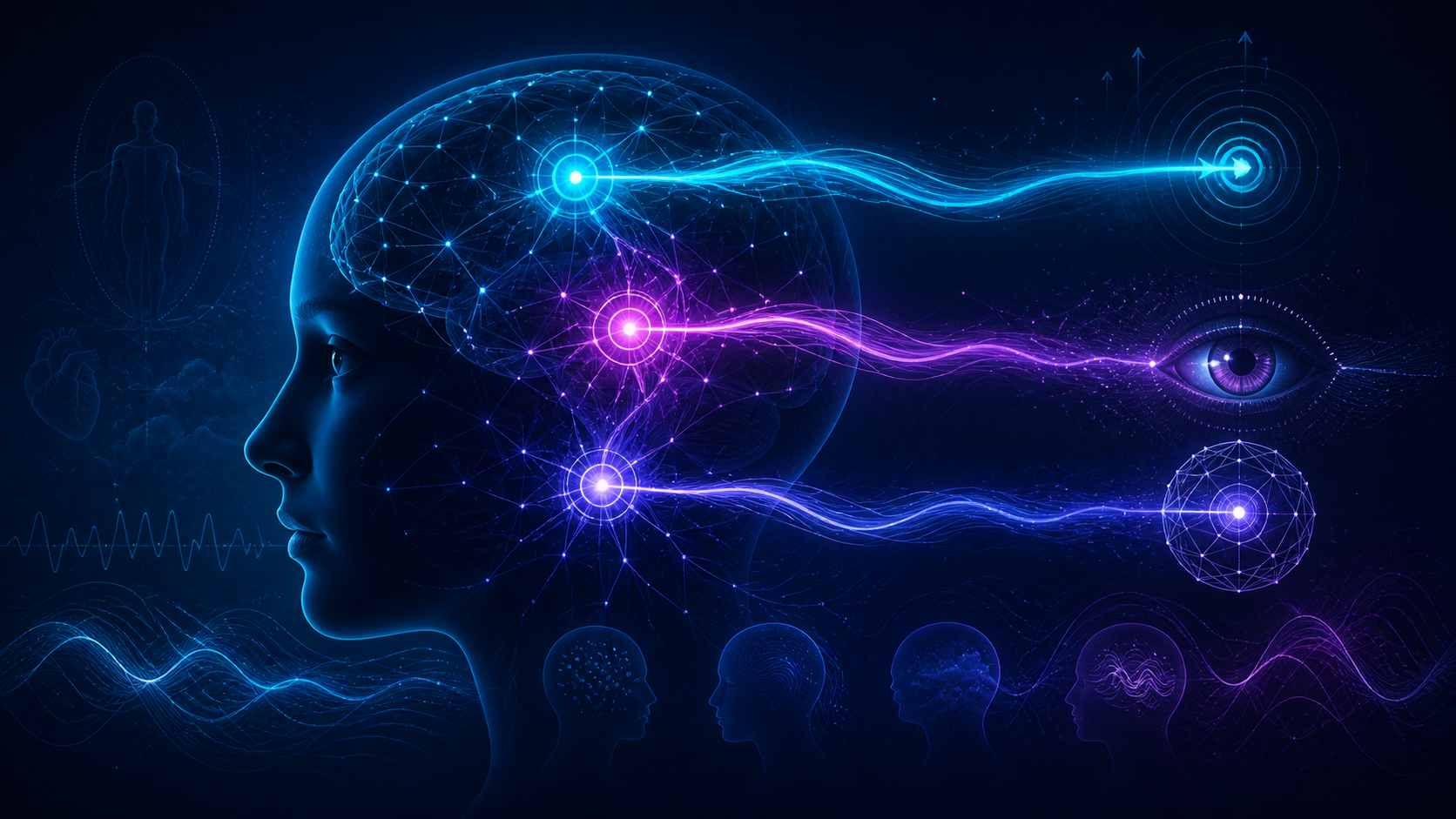
This research line examines the relationship between attentional functioning and individual differences in temperament. Combining behavioural measures such as the Attention Network Test with physiological indices including pupillometry, we investigate how alerting, orienting, and executive control vary across individuals with different temperamental profiles.
The broader aim is to connect cognitive performance with neurobiological models of temperament, including frameworks that link attentional regulation to large-scale functional systems and neurotransmitter-based individual differences. This work contributes to a more integrated understanding of attention as both a cognitive and dispositional phenomenon.