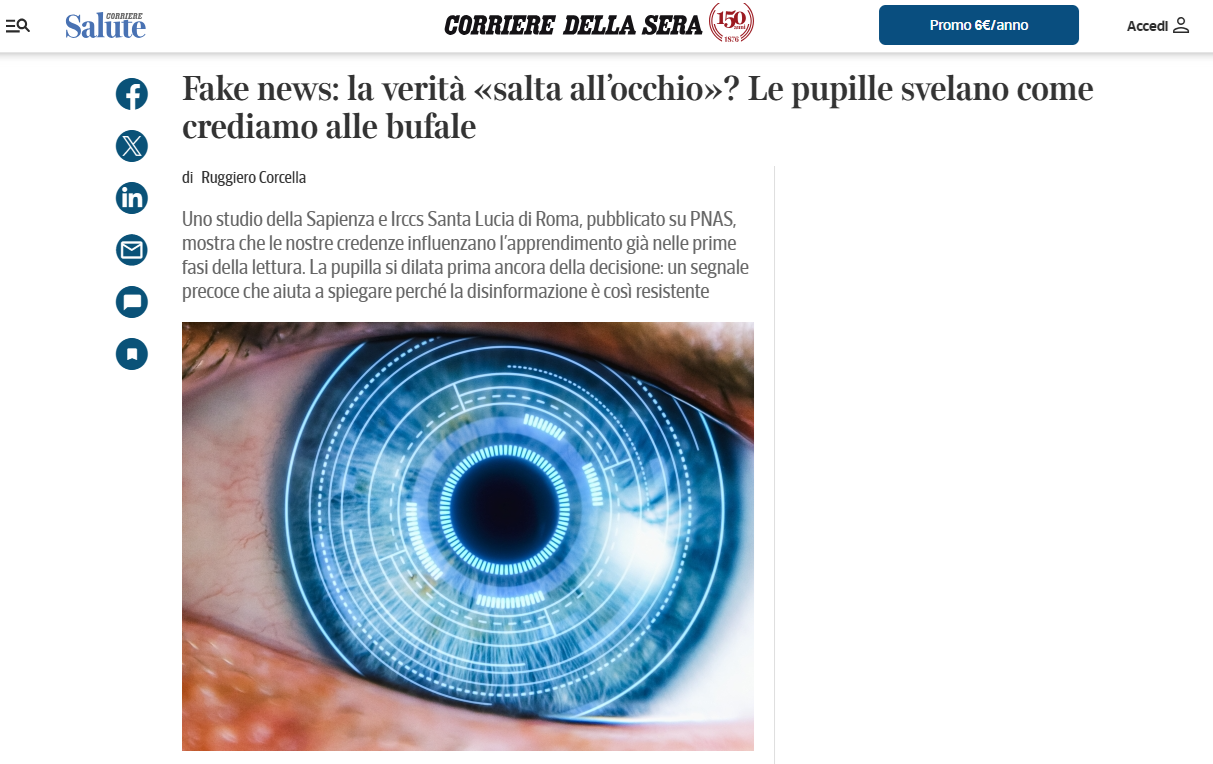
Fake news: la verità salta all'occhio, le pupille svelano come crediamo alle bufale
Coverage of the PNAS study on belief-consistent learning, fake news, and pupillary responses.
Scientific meetings, press coverage, interviews, and collaborations

39th Annual Meeting of the International Society for Psychophysics
Temporal and spatial uncertainty improves the distribution of visual attention and the availability of sensory information for conscious report.

Space is a late heuristic of elapsing time: new evidence from the STEARC effect.
Space is a late heuristic of elapsing time: new evidence from the STEARC effect.

Changes in brain functional connectivity underlying the Space Number Association (SNA).

Decoding Belief Dynamics in the Brain: An ALE Meta-Analysis of Neural Correlates in Belief Formation and Updating.
Coverage of the PNAS study on belief-consistent learning, fake news, and pupillary responses.
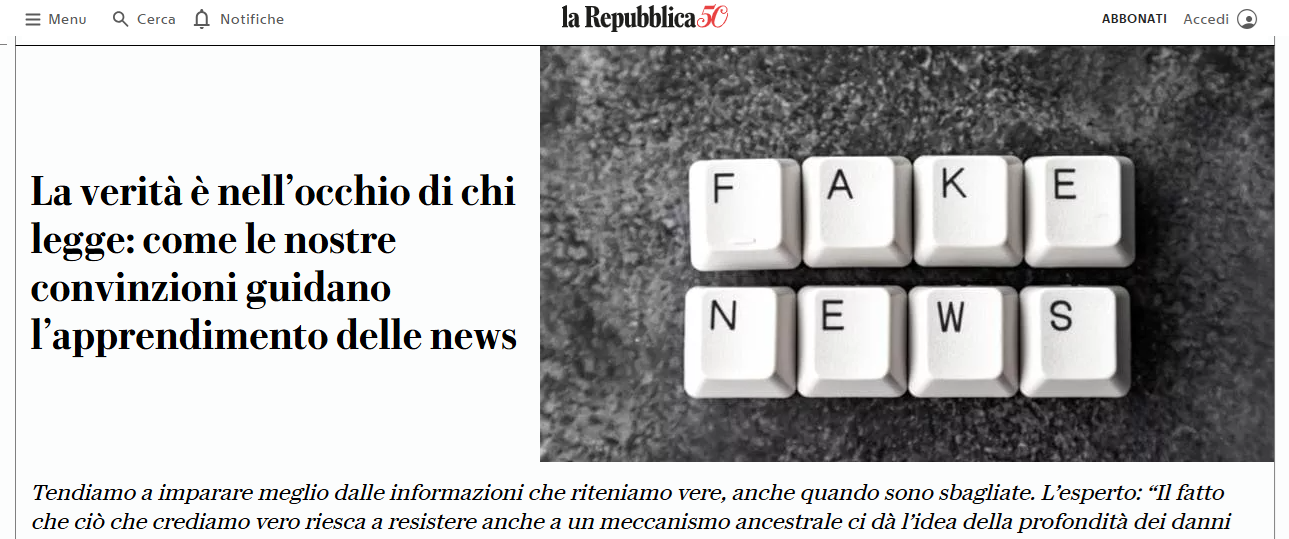
Press article on how prior beliefs shape learning from true and false news.

National press coverage of the study and its implications for misinformation and learning.

Interview about the PNAS study on fake news, belief-consistent learning, and pupillary responses.

Radio appearance focused on the PNAS study on fake news, belief-consistent learning, and pupillary responses.

Television appearance focused on the PNAS study and its implications for misinformation and belief updating.
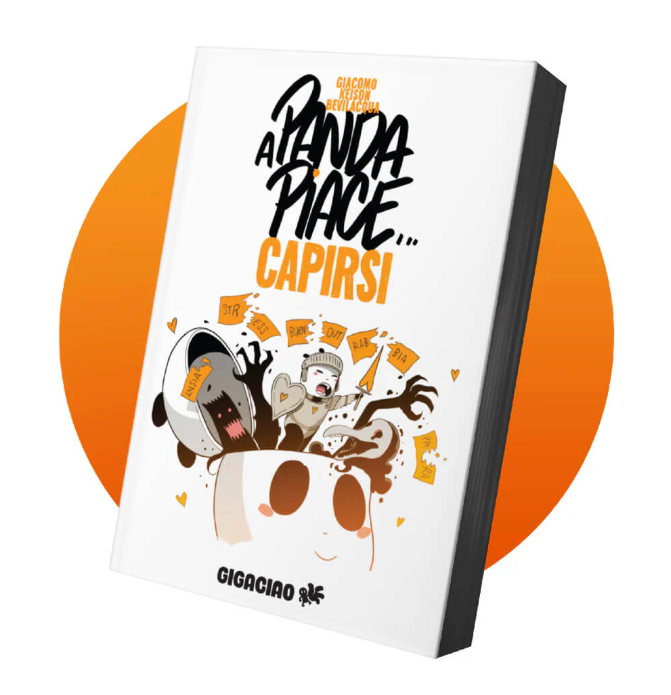
A Panda piace capirsi is a graphic book exploring emotions, mental well-being, and self-understanding, with a focus on experiences such as anxiety, fear, and stress. Stefano Lasaponara curated the scientific content of the project, contributing to the book's evidence-based psychological framework.